Understanding Skin Tone: The Science Behind Our Natural Colors
SKIN CARE EDUCATION
Martha Davis
10/5/20245 min read
What is Skin Tone?
Skin tone refers to the natural color and shade of a person's skin, a distinctive feature that varies widely among individuals. It is primarily determined by the presence and concentration of melanin, a pigment that plays a crucial role in giving skin its color. Melanin is produced by specialized cells called melanocytes, located in the skin's epidermis. There are two main types of melanin: eumelanin and pheomelanin. Eumelanin is the dark brown to black pigment, which provides darker skin tones with their rich hues, while pheomelanin lends a yellow to red color, contributing to lighter skin tones.
Genetics is a significant factor in determining an individual’s skin tone. Inherited traits dictate the specific amount and type of melanin a person produces, meaning that family lineage plays a vital role in skin color continuity. For instance, individuals of African descent typically have higher eumelanin levels, resulting in darker complexions, whereas those of European descent have more pheomelanin, which leads to lighter skin tones. This genetic predisposition to certain skin colors is a fascinating example of human diversity rooted in evolution.
Environmental factors also influence skin color variation. Exposure to sunlight is a critical element, as Ultraviolet (UV) radiation can stimulate melanin production, leading to tanning and darker skin over time. Additionally, geographical location plays a role; populations from regions with higher UV exposure tend to have darker skin as a protective adaptation against sun damage. This variability underscores the interplay between genetics and the environment, illustrating how skin tone can be seen not only as a biological feature but also as an adaptation to varying environmental conditions throughout human history.
The Role of Melanin in Skin Tone
Melanin is a natural pigment responsible for the coloration of the skin, hair, and eyes in humans. It is predominantly produced by specialized cells known as melanocytes, which are primarily located in the epidermis, the outermost layer of the skin. The amount and type of melanin produced by these cells play a pivotal role in determining an individual's skin tone. Essentially, there are three types of melanin: eumelanin, pheomelanin, and neuromelanin. Eumelanin is responsible for black and brown colors, pheomelanin contributes to red and yellow tones, while neuromelanin is less understood and found predominantly in the brain.
The production of melanin occurs through a biochemical process known as melanogenesis, which is stimulated by several factors including exposure to ultraviolet (UV) radiation, genetic factors, and hormonal influences. When skin is exposed to UV light, the melanocytes increase the production of melanin as a defense mechanism, resulting in a tan. This reaction not only assists in determining skin color but also serves as a protective layer against harmful UV rays, which can lead to skin cancer and other forms of damage.
From an evolutionary standpoint, variations in melanin levels among different populations are believed to be adaptations to geographical locations. In regions with high UV radiation, darker skin, which contains higher concentrations of eumelanin, is more prevalent. This darker pigment offers better protection against the potential harm of UV exposure. Conversely, in areas with lower UV levels, lighter skin has evolved, allowing for better synthesis of vitamin D in conditions of limited sunlight. Thus, melanin not only shapes individual skin tone but also reflects the complex interplay between environment and human biology throughout history.
Categories of Human Skin Tones
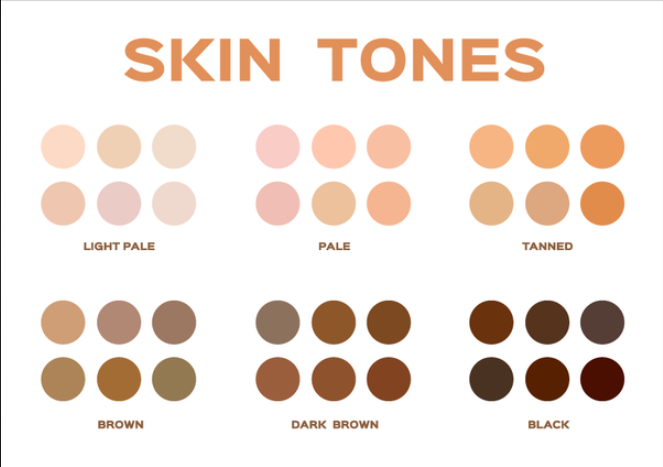
Human skin tones are incredibly diverse and can be categorized into six primary groups: fair or light, light, medium, tan, olive, and dark. Each category exhibits unique characteristics, reflecting the complexity of human pigmentation and the influence of various factors such as genetics, geography, and ethnicity.
The fair or light category generally includes individuals with very pale skin that may have a pink or peach undertone. People in this group often sunburn easily and have lighter hair and eye colors. Examples include many Northern Europeans, who often fall into this category due to their genetic heritage.
Moving to the light category, here we find individuals with a slightly richer complexion that may tan more than their fair counterparts. This group typically has warm undertones, which can be yellow, golden, or neutral. Many people from Mediterranean regions may have skin tones that fit this description.
The medium category represents a further depth of pigmentation, characterized by beige or light brown skin tones. Individuals in this group often possess a range of undertones, from warm to cool. Many East Asians and Hispanics fall within this category, showcasing the varied beauty found across cultures.
Next is the tan category, where skin takes on a more bronzed appearance due to increased melanin. This tone is common among individuals who spend time in the sun or live in sunnier climates, such as those from South Asia or parts of the Middle East.
The olive category is distinct, with skin that has greenish or yellowish undertones. This skin tone can appear light to medium and is prevalent among individuals from Mediterranean countries and certain Middle Eastern populations.
Finally, the dark category encompasses individuals with rich, deep skin tones exhibiting high levels of melanin. This group includes many African and Afro-Caribbean individuals, showcasing the remarkable diversity and beauty of human skin tones.
Cultural Perceptions and Skin Tone
The perceptions surrounding skin tone are deeply rooted in historical, cultural, and social contexts, varying significantly across different societies. Traditionally, specific skin colors have been associated with particular societal roles or attributes, often leading to the establishment of beauty standards that favor lighter or darker hues. Such standards have perpetuated colorism, wherein individuals of similar ethnic backgrounds may face discrimination or preferential treatment based solely on their skin coloration. This ideology has affected self-esteem and personal identity, reinforcing the notion that one's worth can be measured through the lens of skin tone.
Over time, these cultural attitudes have undergone significant transformation. Movements advocating for racial equality and social justice have brought to the forefront the importance of acknowledging and celebrating diverse skin tones. The message that beauty is not confined to a single shade has gained traction, encouraging individuals to embrace their natural skin colors. This shift is vital in empowering those who have historically faced marginalization because of their skin tone, helping them foster a positive self-image and enhanced self-acceptance.
Furthermore, contemporary media representation plays a crucial role in shaping cultural perceptions of skin tone. The inclusion of a broader spectrum of skin colors in advertising, film, and fashion helps challenge the conventional beauty ideals that have dominated for decades. By featuring models and personalities with varied skin tones, the industry is slowly redefining what is deemed beautiful and inviting discussions on inclusivity.
Ultimately, acknowledging and celebrating the diversity in skin tones allows individuals to develop a healthier relationship with their identity, breaking away from harmful stereotypes while fostering a more inclusive society. Embracing such diversity is not only a social imperative but also essential for personal growth and healing in communities that have long felt the impact of colorism.
Looking for color foundations to match your unique skin tone? Click on the link below
https://www.marykay.com/martha100/en-us/products/makeup/face?iad=makeup_chooser_face
Author: Martha Davis
"Hi! My name is Martha Davis, and I'm the creator and owner of Skincare Plain and Simple. I started this little beauty business as a way to supplement my income. At first, I was a bit hesitant about going online, but now I'm so glad I did. My business continues to reach more customers each day. I love making a positive impact on people's lives, one face at a time."